
A finished trailer in the U.S. was too expensive
Custom builds from local manufacturers ran well beyond what I could justify for a brand new business. That single quote is where most people stop.
The complete playbook from The Citrus Society — my lemonade recipe, pricing, every permit I needed, links to the supplies and equipment I use, and all the details of ordering a custom trailer from a factory in China and importing it myself.
Why I wrote this
Custom builds from local manufacturers ran well beyond what I could justify for a brand new business. That single quote is where most people stop.
I got scammed out of $1,500 on my first attempt by paying a supplier outside the platform. There's a right way to do this, and I learned it the expensive way.
Seller's permit, business license, insurance, food handler card, temporary food facility permits, commissary agreement. Nobody lists it in one place, in order.
Inside the book
Recipes, pricing, and where to actually find events.
Everything required for events, and what protects you and your business.
Every item I use, with the links.
Exactly how I found, customized, shipped and imported it as well as the exact cost breakdown.
Real numbers
Figures are from Lauren's 2026 purchase. Tariffs, fuel surcharges and broker rates change constantly — always get a current quote before budgeting your own project.
My story
A few years ago I was another person with an idea, dreaming about running my own lemonade trailer. The problem was simple: I didn't know where or how to start, and I was overwhelmed by the process.
Before this, I ran a mobile bar company for nine years. It was successful, but I worked mostly weddings, so nearly everything landed on a Saturday night. I had capacity during the week and wanted repeat clients — events I could work again and again. Lemonade was the perfect fit.
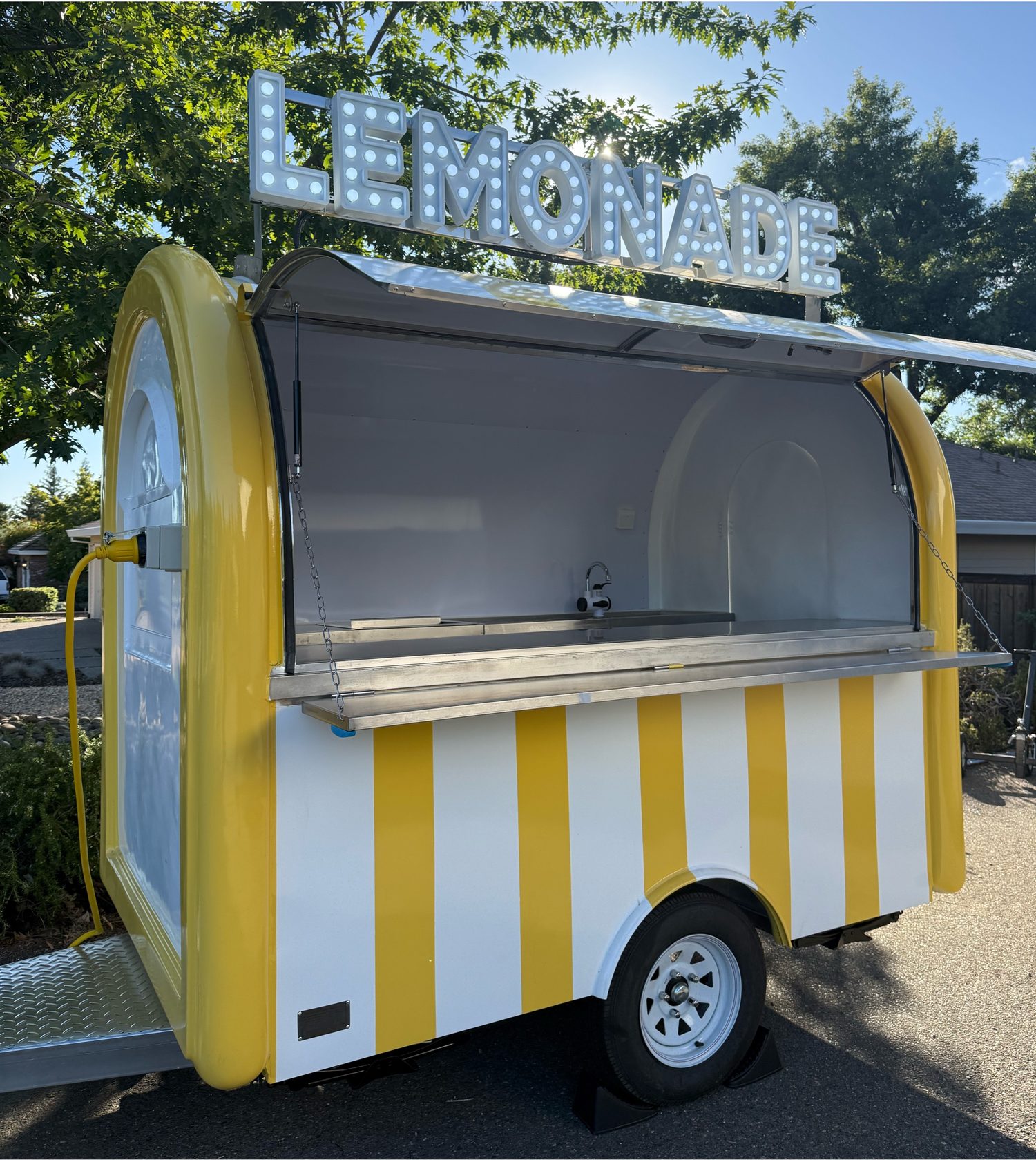
I knew I wanted to run it out of a trailer, but a finished food trailer in the U.S. was too expensive. So I went the other direction, ordered a custom one from a factory overseas, and imported it myself. I made mistakes. One of them cost me $1,500.
This book is every step I took to plan, launch and run my lemonade company. I hope it helps you in your journey.
— Lauren Lundquist, Founder, The Citrus Society 🍋
Follow along on InstagramGet the book
How to Start, Run, or Grow Your Lemonade Business
Ordering through the manufacturer in Part Four? Give them the name “LAUREN” when you book and I'll refund what you paid for this book once your trailer ships.
Valid six months from purchase · one refund per buyer🍋 Instant PDF download — the link is emailed to you the moment you pay.
Questions
No. Parts One through Three apply whether you're running out of a popup tent or a trailer — the recipe, pricing, permits, supplies and event booking are the same. Part Four is there for when you're ready to upgrade.
Much of this book will apply to any drink vendor whether that's lemonade, coffee, matcha, or dirty sodas.
None. I started from zero on the lemonade side. This eBook will walk you through the entire process.
Yes, importing commercial equipment is routine. What matters is doing it correctly: proper classification, duties paid, and a licensed customs broker. The book walks through each piece and tells you where to verify current requirements yourself, because they change.
Mine ran about four months from starting my research to owning a working trailer but part of that timeline will depend on if you know what you're doing and can keep the process moving.
Only if you build it to your county's requirements. Sink count, hot water, holding tank sizes and certified equipment vary by county, and some accept a two-compartment sink for beverage-only operations while others don't. The book has you get your county's requirements in writing before you finalize the build, because adding a sink at the factory is far cheaper than retrofitting.
$7,625.34 door to door — $3,970.88 to the manufacturer and $3,654.46 in import, customs and delivery costs. Both tables are itemized in the book and reproduced on this page. Your numbers will differ; tariffs and freight rates move.
My examples come from running a trailer in the Sacramento area, and some specifics — like the state seller's permit — are California's. The structure applies anywhere in the U.S.; you apply it to your own state and county.
Instantly. Checkout emails you a download link for the PDF.
Because the book is a digital download delivered instantly, sales are final. If your download link doesn't work or you have trouble opening the file, email us and we'll sort it out straight away.